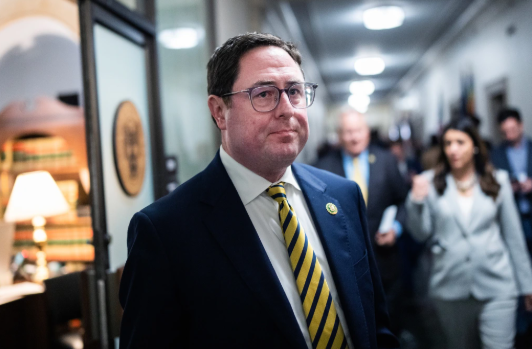
A Raucous Reception for the “Big Beautiful Bill”
Representative Mike Flood (R-NE) faced a severely hostile crowd on Monday night, enduring relentless boos and chants of “Vote him out!” while attempting to defend massive proposed cuts to Medicaid. A viral 43-second video clip, amplified by the Democratic opposition group American Bridge 21st Century, captured the intense moment Flood tried to frame the GOP-backed legislation as a protective measure for the healthcare program.
The immediate, deafening backlash from his own constituents highlighted the deep unpopularity of the Trump-backed spending cuts, turning a standard political update into a glaring public relations disaster for the Nebraska Republican. The raucous scene underscores the massive messaging challenge facing the GOP as they attempt to sell highly controversial healthcare changes to working-class voters.
The town hall took place in Lincoln, Nebraska, specifically inside the Kimball Recital Hall at the University of Nebraska. Over 800 attendees packed the venue, clearly eager to voice their frustrations regarding the sprawling 900-page policy and tax package signed into law by President Donald Trump. While Flood attempted to outline the benefits of the legislation, which he frequently referred to as the “Big Beautiful Bill,” the audience was having none of it. They repeatedly interrupted his talking points, shouting down his attempts to justify the severe reductions in public health spending and the reallocation of taxpayer dollars.
The tension reached its absolute breaking point when Flood explicitly addressed the changes to the national healthcare safety net. “More than anything, I truly believe this bill protects Medicaid for the future,” he stated from the stage. This single sentence triggered an immediate explosion of anger from the crowd. The resulting shower of boos forced the congressman to briefly pause, visibly reacting to the sheer volume of the opposition. The moment perfectly encapsulated the stark divide between the GOP’s legislative agenda in Washington and the raw, unvarnished reactions of voters back home.
Navigating Medicaid Changes and Work Requirements
As the boos cascaded through the auditorium, Flood attempted to regain control of the narrative by drawing a sharp distinction between Medicare and Medicaid. He emphasized that the proposed changes targeted the latter, which provides health coverage for low-income individuals, rather than the former, which primarily serves senior citizens. The congressman leaned heavily into the GOP’s core argument for the cuts: the introduction of mandatory work requirements for able-bodied recipients. He asked the crowd a direct, challenging question, attempting to corner them on the issue of free healthcare for the unemployed.
“Do you think that people who are 28 years old, who can work and refuse to work, should get free health care?” Flood challenged the audience. Rather than agreeing with his premise, many in the crowd loudly yelled “yes” in response, entirely rejecting the conservative framing of the issue. “I don’t think that a majority of Nebraskans agree with you,” Flood quickly replied, attempting to appeal to the broader, traditionally conservative base of his district. However, the immediate vocal pushback demonstrated that the local anger regarding healthcare access cut across typical partisan lines.
The intense focus on Medicaid reductions overshadowed nearly every other aspect of the town hall. Attendees formed long lines at the microphones, grilling the congressman on the tangible impact these cuts would have on vulnerable families. By attempting to balance the national debt through reductions in health services and funding for the National Institutes of Health, Flood found himself defending a deeply unpopular strategy. When he pointed to a digital tracker displaying the $36 trillion national debt and asked, “How can you be against a balanced budget?” the crowd simply responded with more boos and thunderous chants of “Tax the rich.”
Defying Leadership and Facing the Political Fallout
Holding this town hall was a significant political risk for Mike Flood, directly contradicting the explicit advice of his own party’s leadership. Earlier in the month, Speaker of the House Mike Johnson had strongly advised Congressional Republicans against holding in-person town halls, citing the high potential for disruptive protests. Johnson alleged that Democratic activists were being paid to hijack these events. Despite these warnings, Flood pushed forward, scheduling appearances in Columbus, Seward, and finally, the highly contentious event in Lincoln. His decision to brave the ire of his constituents placed him directly in the crosshairs of public anger.
The political calculus for Flood is complex. He represents Nebraska’s 1st Congressional District, a solidly Republican area that he won comfortably in the previous election cycle. He was reelected with 60% of the vote, navigating a district that includes the Democratic-leaning Lancaster County alongside vast, deeply conservative rural tracts. However, the intense backlash in Lincoln, coupled with similarly hostile crowds in heavily Republican areas like Platte County, suggests that his support for these specific healthcare cuts could negatively impact his future approval rating. Defending the Trump administration’s agenda is proving far more difficult in person than it is on paper.
Despite the constant heckling and the chants demanding his removal from office, Flood attempted to downplay the severity of the confrontation following the event. Speaking to local media, he described the atmosphere as “spirited” and characterized the friction as an essential part of the democratic process. He acknowledged the high decibel level but insisted he was not surprised by the reception in a college town.
- A Warning Sign for the Midterms: The viral footage of the town hall provides a powerful weapon for Democratic strategists looking toward future election results. The raw anger regarding Medicaid cuts demonstrates that healthcare remains a highly volatile, mobilizing issue capable of threatening GOP incumbents even in relatively safe districts.
- The Danger of Unfiltered Feedback: Flood’s experience highlights exactly why GOP leadership fears open forums. When constituents are allowed to directly question their representatives regarding complex, punitive legislation, the carefully crafted political messaging often collapses under the weight of real-world anxiety.
As the video continues to circulate online, it serves as a stark reminder of the intense public scrutiny surrounding the GOP’s domestic policy agenda. Mike Flood attempted to sell a massive overhaul of the American healthcare system to his constituents, and they loudly and aggressively rejected his pitch. The relentless booing in that Nebraska auditorium strongly indicates that the political battle over Medicaid is far from over, and the consequences for lawmakers supporting these cuts could be severe.