A High-Scoring Legacy Overshadowed by a Sudden End
Terry Furlow was one of the most prolific scorers to ever step onto a college basketball court, but his historical footprint is permanently overshadowed by a mysterious 1980 car accident that took his life at just 25 years old. He possessed the raw, unfiltered talent necessary to become a defining figure in professional sports. Instead, his sudden death on an Ohio interstate left behind a tangled narrative of immense potential, whispered rumors, and a grieving family searching for closure. We are still trying to understand exactly what happened that night and how a young athlete who shared the floor with legends faded so quickly into tragedy.
Representing the Greatest: The Troubling, Tragic, and Mysterious Story of Terry Furlow
Before the dark headlines and the persistent whispers, there was just pure, unadulterated basketball talent. Coming out of Flint, Michigan, Furlow was a local hero who naturally transitioned into an unstoppable offensive machine for Michigan State University. He didn’t just play the game; he attacked the rim with a level of aggressive confidence that visibly intimidated opposing defenses. Fans packing the arena knew they were watching someone special. They were witnessing a player who could completely take over a game entirely on his own terms, carrying his team on his back when the clock was winding down.
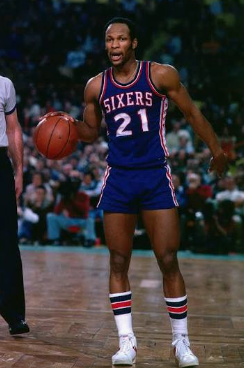
The overwhelming hype surrounding his amateur career inevitably pushed him toward the professional ranks with massive expectations. Scouts across the country recognized his unique ability to create his own shot under pressure, leading the Philadelphia 76ers to select him in the first round of the 1976 draft. The front office assumed that he would slide perfectly into a roster already loaded with immense star power. The reality of his transition to the pros, however, proved to be far more complicated than anyone in Philadelphia initially anticipated.
Unpacking the College Stats and NBA Basketball Reality
To truly grasp what the sports world lost, you have to look closely at the raw numbers from his time in East Lansing. A quick glance at Furlow’s impressive college stats reveals a player who absolutely dominated the Big Ten conference during his senior year. He averaged an astonishing 29.4 points per game in the 1975-1976 season, establishing a scoring record that stood the test of time at Michigan State. He was a high-volume shooter who actually made his shots, commanding the offense with a natural rhythm long before the three-point line changed the fundamental geometry of the sport.
Transitioning into the highly structured world of NBA basketball is rarely a smooth process, and Furlow immediately clashed with the rigid systems enforced by professional coaches. In Philadelphia, he found himself playing under Gene Shue, a head coach who demanded strict adherence to set plays and heavy defensive rotations. Furlow was a free spirit on the court, accustomed to having the absolute green light whenever the leather touched his hands. This fundamental disagreement on how the game should be played resulted in heavily restricted minutes and visible frustration sitting on the bench. As noted by Mike Sielski in his extensive investigation into Terry Furlow’s short tenure with the Sixers, the young guard heavily struggled to adapt his independent scoring mentality to a team that already featured dominant personalities like Julius Erving and Doug Collins.
That initial locker room friction triggered a turbulent, exhausting journey across the league. The Sixers eventually traded him, starting a bouncing sequence that saw him wear jerseys for the Cleveland Cavaliers, the Atlanta Hawks, and finally the Utah Jazz. In each city, brilliant flashes of his undeniable talent would briefly appear. He would drop 20 points in a single quarter, reminding the league why he was a first-round pick, according to his official professional archives. Yet, he would clash with management the very next week. He was undeniably gifted but seemingly unable to find a permanent home in an era of the league that was notoriously unforgiving to players who refused to conform.
The Fatal Car Accident and the Search for Answers
Everything came to a violent, immediate halt in the early hours of May 23, 1980. Furlow had just finished his season playing for the Utah Jazz and was spending his offseason back in the Midwest. While driving his Mercedes-Benz on Interstate 71 near Linndale, Ohio, the vehicle suddenly veered off the road and smashed violently into a wooden utility pole. The car accident was so incredibly severe that local first responders had a difficult time extracting him from the collapsed wreckage. He died at the scene, abruptly ending a life that was still very much in the process of figuring itself out.
The immediate aftermath was chaotic, with local authorities scrambling to determine exactly what went wrong on that stretch of highway. The medical examiner’s official report listed Furlow’s cause of death as severe head and internal injuries sustained entirely from the blunt force impact of the collision. However, the toxicology reports released weeks later added a dark and highly controversial layer to the tragedy. The coroner found traces of cocaine and Valium in his bloodstream, sparking intense public speculation about his off-court lifestyle and the immense mental pressures he faced away from the hardwood.
This toxicological revelation completely overshadowed the normal mourning process. It shifted the public conversation away from his impressive basketball achievements and directly toward the hidden dangers of professional sports. Fans and sports writers alike wondered if the constant trades, the relentless pressure to perform, and the crushing isolation of the road had pushed him into a destructive downward spiral. The lack of a definitive timeline for his final hours means that certain details about that night will forever remain locked in the past. We know the physical mechanics of the crash, but the emotional state of the driver remains a heavy, unanswered question.
Remembering the Man Beyond the Tragic Obituary
When the dust finally settled, the reality of the situation hit his relatives with unimaginable force. Behind the sensationalized newspaper headlines and the standard Furlow obituary printed in the Sunday sports sections, there was a real family forced to navigate a public nightmare. He left behind a young son who would have to grow up reading complex, often unforgiving stories about a father he barely got the chance to know. The human cost of the accident extended far beyond the basketball court, permanently altering the trajectory of a family that had placed so much hope in his professional success.
Today, dedicated fans and basketball historians still occasionally seek out his resting place to pay their quiet respects. Visiting Furlow’s grave offers a somber moment to reflect on the immense pressure placed on young athletes who are handed money and fame without a proper safety net. The cemetery markers do not mention his collegiate scoring averages or his prestigious draft position. They simply mark the resting place of a son, a father, and a man who passed away far too young, standing as a quiet reminder of the fragile nature of athletic stardom.
We cannot rewrite history or untangle the complicated final months of his life. What we can do is look at the entire picture with an empathetic lens. Terry Furlow was an extraordinary talent whose human flaws were heavily magnified by the harsh spotlight of professional sports. His story serves as a stark historical marker, reminding us that the athletes we cheer for are often dealing with very real, dangerous personal struggles behind the scenes. His memory persists not just in the record books, but as a sobering narrative of a brilliant light extinguished without warning.