Saudi Airstrikes Paralyze Sanaa Airport to Block Iranian Plane Carrying Houthi Delegation
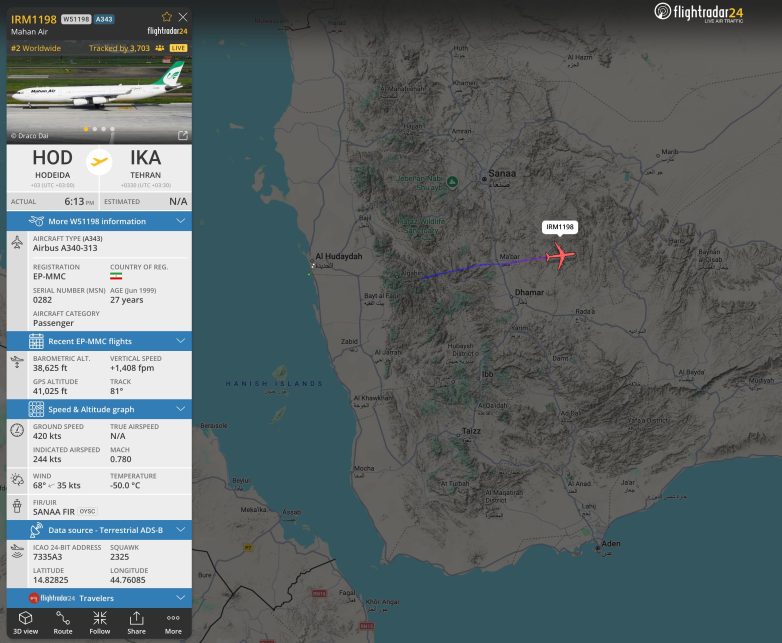
A Saudi-led coalition launched targeted airstrikes on Sanaa International Airport on Monday, intentionally cratering the main runway to physically prevent an Iranian aircraft from landing. The flight, carrying a prominent delegation of Iranian-backed Houthi rebels returning from the funeral of Iran’s supreme leader, Ayatollah Ali Khamenei, was abruptly forced to divert. The internationally recognized Yemeni government claimed full responsibility for the tactical interception, framing it as a necessary defense of sovereign airspace. Defense officials confirmed the strikes were a deliberate maneuver to block unauthorized Iranian flights from coordinating with the northern insurgent group. Following the runway’s destruction, the diverted aircraft ultimately landed at Hodeida Airport.
The Strategic Strike on Sanaa Airport
Military forces aligned with the internationally recognized Yemeni government executed a highly calculated operation to disable the primary landing strip at Sanaa International Airport. The structural damage inflicted by the heavy munitions made it physically impossible for any commercial or military transport aircraft to touch down safely. Military planners specifically timed the bombardment to coincide with the approach of an inbound flight from Tehran, ensuring the aircraft would have no choice but to abandon its descent. According to the latest news reports on the strike, the operation was framed purely as an interdiction mission rather than a broader assault on the capital.
The aircraft in question was transporting a high-level Houthi delegation that had recently traveled to Iran to attend the state funeral of Ayatollah Ali Khamenei. Yemen’s internationally recognized government views such diplomatic exchanges as direct threats, arguing that they facilitate the transfer of weapons, funding, and strategic directives from Iranian handlers to the rebel forces. By violently disrupting the delegation’s return journey, the Saudi-backed coalition sought to sever the visible logistical ties between the insurgency and its primary international benefactor. Officials tracking the flight path noted that the plane was well within Yemeni airspace when the runway was neutralized.
Faced with a destroyed landing zone and the immediate threat of further anti-aircraft measures, the flight crew aggressively altered their trajectory away from the capital city. The Houthis released a brief communication confirming that the plane rapidly changed its route and navigated toward the western coast, eventually landing at Hodeidah Airport. This coastal facility, while operational, lacks the extensive infrastructure of the capital’s main hub and sits in a highly contested operational theater. The forced diversion successfully humiliated the delegation while establishing a hard boundary regarding who controls the skies over northern Yemen.
Evaluating What Happened Between Iran and Saudi Arabia
To fully grasp this sudden escalation, observers must look at the protracted proxy war that has violently divided Yemen for years. A powerful Saudi-led coalition, anchored in Yemen’s southern territories and supporting the internationally recognized government, has been locked in a brutal conflict against the Houthis entrenched in the north. Riyadh views the rebel faction not merely as a local insurgency, but as a direct extension of Iranian military power positioned right on the Saudi border. The deliberate bombing of the airport serves as a loud, kinetic message that Saudi forces will actively intervene to sever physical connections between Tehran and Sanaa.
Shortly before the munitions impacted the runway, Gen. Taher al-Aqili, the government’s defense minister, issued a severe video statement outlining the military’s strict zero-tolerance policy. He directly warned foreign actors against infiltrating Yemeni airspace with Iranian aircraft, characterizing such flights as an intolerable breach of national security. The defense minister declared firmly that the government’s patience had entirely run out regarding these unauthorized diplomatic and military transports. He emphasized that any hostile aircraft violating Yemeni sovereignty would be aggressively confronted and dealt with using all available military means.
Interestingly, Saudi Arabia did not immediately acknowledge carrying out the airstrikes, maintaining a strict operational silence in the hours following the bombing. Saudi officials consistently ignored immediate requests for comment from international press agencies, a standard tactical evasion used to maintain plausible deniability while allowing their Yemeni allies to claim the spotlight. Despite this official silence from Riyadh, military analysts universally agree that the precision and payload required to disable the runway points directly to Saudi air assets. This calculated ambiguity allows the coalition to exert immense pressure on Iranian logistics without officially declaring a new phase of open warfare.
Escalating Tensions and Airspace Sovereignty
The bombing immediately sparked intense debates among geopolitical analysts regarding whether Saudi Arabia is at risk of war expanding beyond the current, relatively contained proxy battlefields. By directly targeting a transport carrying officials returning from a major state event in Tehran, the coalition has brazenly challenged Iran’s ability to protect its regional allies. The complete blockade of Sanaa has historically been a massive point of friction, but transitioning from bureaucratic flight bans to live explosives dropped on civilian infrastructure marks a dangerous tactical shift. Regional security experts warn that this maneuver could prompt asymmetric retaliation against Saudi oil infrastructure or maritime shipping lanes.
This aggressive enforcement of airspace sovereignty demonstrates the lengths to which the southern-based government will go to isolate the northern territories. The coalition has essentially weaponized access to the country, using its aerial dominance to dictate exactly who can enter and exit the war zone. Observers note that preventing an Iranian plane from landing is not just about stopping one specific group of diplomats; it is a broader demonstration of total air supremacy. The Houthis, despite their ground combat capabilities and missile stockpiles, remain highly vulnerable to these types of uncontested aerial interdictions.
While the Houthi leadership managed to secure a safe landing in Hodeidah, the psychological and strategic damage of the Sanaa strikes cannot be understated. The rebels heavily rely on the capital’s infrastructure to project an image of legitimate governance and statehood to their domestic supporters. Reducing the main runway to rubble physically isolates their political center and severely limits their ability to conduct any semblance of normal state affairs. Moving forward, the rebels will be forced to rely on compromised, secondary logistical routes that are far easier for coalition forces to monitor and harass.
Regional Power Dynamics and Military Supremacy
The confrontation over the Sanaa runway forces international observers to continually reassess who is stronger between Iran and Saudi Arabia in this protracted shadow war. Saudi Arabia clearly dominates the conventional military space, utilizing billions of dollars in advanced Western aerospace technology to strike targets with absolute impunity. Their ability to loiter over Yemeni airspace and crater a runway on demand showcases a level of conventional air dominance that Tehran simply cannot match. However, conventional superiority has repeatedly failed to completely neutralize the deeply entrenched insurgent networks operating on the ground.
Conversely, Iran exercises a completely different philosophy of power projection that relies on asymmetric warfare, religious alignment, and highly motivated proxy militias. While Tehran cannot send fighter jets to protect the airspace over Sanaa, it has successfully equipped the Houthis with advanced ballistic missiles and explosive drone technology capable of striking deep into Saudi territory. The Iranian strategy does not require winning conventional dogfights; it only requires keeping their adversaries bogged down in an unwinnable, financially draining quagmire. The recent airstrikes reflect Saudi frustration with this persistent, low-cost Iranian strategy.
Global markets and the international diplomatic corps are monitoring this latest escalation with profound concern, fearing a disruption in regional stability. To understand the stakes, analysts frequently examine the potential fallout through specific lenses:
- Economic Impact of Retaliation: If the Houthis decide to avenge the runway bombing by launching drone swarms at Saudi Aramco facilities, global energy markets could experience severe supply shocks and massive price spikes. Retaliatory strikes against critical oil infrastructure remain the rebels’ most effective method for imposing economic pain on Riyadh.
- Diplomatic Stagnation: By physically attacking a diplomatic transport, the coalition has virtually guaranteed that any ongoing, back-channel peace negotiations will immediately freeze. Trust between the warring parties was already non-existent, and using high-yield explosives to resolve a dispute over flight clearances destroys any remaining foundation for dialogue.
The Future Consequences for the Yemeni Conflict
Beyond the immediate geopolitical posturing, the destruction of the runway at Sanaa International Airport carries devastating consequences for the civilian population trapped inside the capital. The facility serves as an essential, albeit highly restricted, lifeline for medical evacuations and the delivery of specialized humanitarian aid. Even though the coalition specifically targeted the runway to stop a political delegation, the resulting infrastructural damage halts all incoming flights, punishing millions of civilians who rely on outside assistance. Human rights organizations quickly condemned the strikes, noting that military objectives must be balanced against the survival needs of the general population.
The internationally recognized government’s brazen assertion of sovereignty represents a hardened, uncompromising stance that will likely define the next phase of the conflict. By authorizing Gen. Taher al-Aqili to publicly threaten hostile aircraft and claim the airstrikes, the government is projecting a renewed confidence in its military mandate. This posture, heavily supported by Saudi tactical backing reported globally, suggests that the coalition is done tolerating the quiet, gradual normalization of Houthi authority. They are clearly willing to use overwhelming kinetic force to remind the world that the insurgents are not the legitimate rulers of Yemen.
Ultimately, this localized tactical victory for the coalition may inadvertently accelerate the very Iranian integration they are trying to prevent. By completely isolating the Houthis and cutting off their access to the outside world, the coalition forces the rebels to become even more dependent on Tehran’s clandestine smuggling routes. As the dust settles over the ruined concrete in Sanaa, the fundamental dynamics of the war remain tragically unchanged. The airstrikes achieved their immediate goal of diverting a single airplane, but they have also ignited a volatile new spark in a conflict that shows absolutely no signs of burning out.
Related Story : China’s Expanding Hypersonic Missile Arsenal: YJ-21, DF-17, and U.S. Defense Gaps in 2024