Aircraft Drone Inspection Technology: Streamlining Unmanned Maintenance for Faster, Safer Aviation Operations
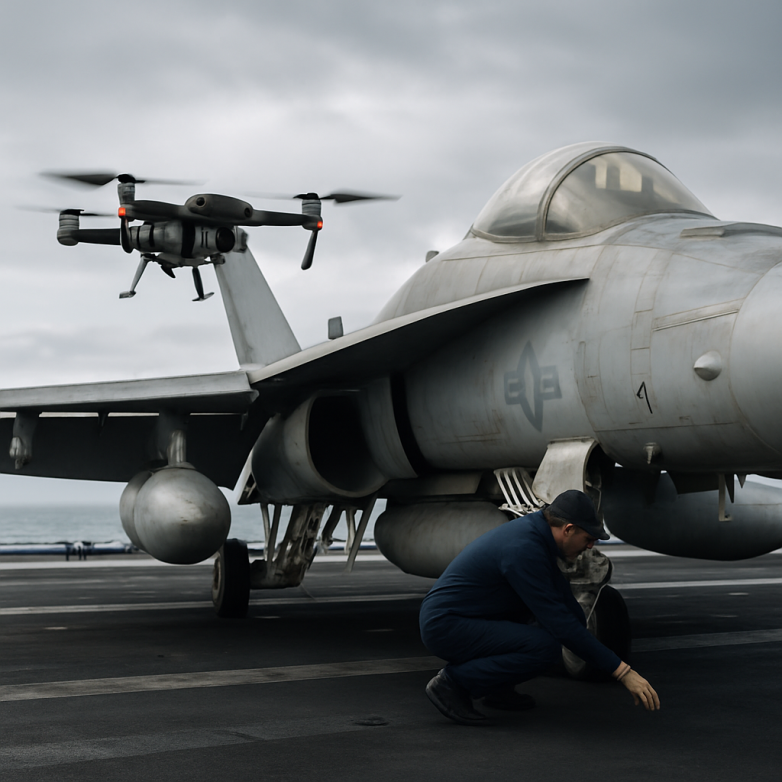
Modern aircraft inspection is rapidly evolving thanks to advanced drone inspection technology. Today, unmanned aerial vehicles (UAVs) and ground robots are transforming how the US Air Force and commercial operators evaluate aircraft safety and structural health. These systems are shifting inspections from traditional manual checklist procedures to a highly automated, hands-free process. The outcome is not just greater efficiency—turnaround times are reduced, repeatability is increased, and safety is enhanced, meeting the rising demands of aircraft operators under tight operational timelines.
Operational Capabilities of Aircraft Drone Inspection Technology
The heart of modern aircraft drone inspection technology lies in a combination of small UAVs and ground robots, each programmed for specialized aviation tasks. Inspection drones can hover close to aircraft fuselages, scanning every millimeter of an airframe with high-resolution imaging and thermal sensors. This capability is vital, as it allows detection of fatigue cracks, surface dents, and subtle heat leaks—defects easily missed during manual walk-arounds.
Ground robots complement these UAVs by accessing hard-to-reach places. They maneuver into tight spaces under the wings or fuselage, climbing shallow ramps as needed, equipped with optical and infrared scanners. Unlike human inspectors, these robots maintain precision in repetitive tasks, providing objective, digitally logged results that fleet managers can review later. This reduces human error and fatigue, factors traditionally problematic in overnight or quick-turn inspections.
Importantly, inspection robots communicate autonomously. Real-time data links transmit status pings and automated route completion notifications, so controllers are only needed for override or mission planning. Field trials with the US Air Force have shown that even challenging conditions—wind, glare, or debris—can be managed through sensor fusion and redundant data streams, ensuring inspections continue without interruption (Jane’s Defence).
Unmanned Maintenance in Aviation: From Field Demonstration to Mainstream Adoption
Unmanned maintenance-based aviation was originally a concept reserved for experimental teams, but successful demonstrations have laid the groundwork for broad adoption. During live field tests, Air Force crews rolled out ground robots alongside quadcopter drones, effectively replacing the need for human inspectors to manually scan each section of a jet. These demos have showcased significant reductions in manpower requirements, without sacrificing thoroughness or safety.
The endurance and autonomy required of these UAVs highlight new technical thresholds. It’s not enough for a drone to fly in calm hangar conditions; it must navigate cluttered ramps and outdoor flight lines, maintaining stable communication links while fighting environmental interference. Endurance testing simulates high-tempo operations, measuring how well systems cope with multiple consecutive aircraft inspections—a direct parallel to real squadron tempo in combat or training environments.
This shift is fundamental for aviation companies. By moving away from labor-intensive, checklist-driven models and toward repeatable, codified inspection routines, operators meet strict regulatory and operational requirements much more quickly and without bottlenecking turnaround schedules.
Technical Requirements, Platforms, and Leading Drone Companies
The requirements for successful aircraft drone inspection technology center on autonomous navigation, sensing capabilities, and seamless integration with existing ground operations. Core technologies include high-precision lidar, advanced computer vision, and AI-powered fault recognition software. The software must analyze images in real time, identifying trouble spots such as corrosion or structural anomalies without relying on human decision makers for every step.
Leading inspection drone companies, such as Donecle and Mainblades, have developed proprietary platforms tailored for aviation maintenance. Their systems are deployed by commercial airlines, MRO (maintenance, repair, and overhaul) providers, and now, increasingly by military operators. These platforms differ mainly in the level of autonomy, sensor package customization, and integration with fleet management software. For example, Donecle’s fully autonomous drones are already in operation at some major European MROs, offering rapid, repeatable, and regulatory-compliant inspections.
Compatibility with aviation requirements drives innovation among drone startups and established manufacturers alike. From robust controller software to dedicated inspection routines optimized for Airbus or Boeing models, customization ensures seamless adaptation across different aircraft types. New drone inspection platforms are expected to continue pushing the limits on battery life, real-time fault detection, and integration with enterprise maintenance systems.
Implementation Challenges and Regulatory Considerations
Despite the promises of drone-based aircraft inspection, there are important challenges. The FAA maintains strict controls over how unmanned aircraft operate on and near airfields, especially when passenger or commercial aircraft are present. Ensuring drones adhere to airspace, security, and operator safety guidelines is critical to prevent incidents or inspection delays.
Operators must also verify the legal and security frameworks shaping UAV deployment. Legislation such as the American Security Drone Act brings added complexity—certain suppliers or platforms may be restricted on federal contracts, prompting military and security contractors to qualify drones and controller software to American or allied standards. This highlights ongoing collaboration between companies like Skydio, American Robotics, and government agencies to meet evolving compliance demands.
Technical resilience is another hurdle. Systems must maintain operational integrity during high-tempo activity, coping with sensor glare, interference, or variable lighting. Accordingly, UAV platforms are engineered with redundancies—failover radio links, dual-sensor configurations, and encrypted data pathways—directly addressing regulator and customer concerns about safety, reliability, and data protection.
Strategic Impact on Repeat Inspections, Turnaround, and Aviation Careers
The introduction of drone inspection technology is transforming not only technical operations but also workforce dynamics in aviation maintenance. Turnaround times for aircraft inspections are shrinking, with drones consistently outperforming manual teams on speed and completeness. This accelerated cadence enables airlines and military operators to cycle more aircraft through inspection and maintenance slots without suffering costly downtime or fleet gaps.
Repeatable, software-driven inspection routines bring consistency and traceability to the process. Instead of variable results from different human inspectors, maintenance teams now benefit from standardized digital records. This archival capability supports fleet-wide trend analysis, helping operators pinpoint chronic issues and optimize long-term maintenance strategies—improving both safety and performance outcomes.
For technicians, the rise of unmanned inspections signals a shift in required skill sets. Aviation maintenance careers increasingly involve operating high-tech drone platforms, interpreting sensor data, and integrating inspection results with digital maintenance ecosystems. Specialized certification programs and academy competitions, such as regional UAV invitational opens, are shaping the workforce pipeline to meet this demand, providing valuable pathways for ambitious professionals and forward-thinking companies alike.
Future Pathways for Aircraft Drone Inspection and Unmanned Aviation Maintenance
As aircraft drone inspection technology matures, its integration into daily aviation routines will expand rapidly. Next-generation inspection UAVs are slated to incorporate advanced AI-driven diagnostics, multi-modal sensing, and seamless integration with airfield and hangar logistics systems—setting new industry standards and enabling fully data-driven aircraft health management.
Strategically, this transition is compelling for operators concerned with efficiency and scalability. From large commercial fleets to nimble military squadrons, unmanned maintenance systems unlock the ability to perform granular repeat inspections at any tempo, reducing bottlenecks while maintaining the highest safety margins. Investors and executives in drone companies, including those tracking aviation tech stocks and startups in India, the US, or Europe, are closely watching the competitive landscape for the next leap in UAV-enabled platform capabilities.
Aircraft drone inspection is now establishing itself as an indispensable pillar of aviation maintenance, offering unprecedented autonomy, safety, and operational agility for companies, crews, and operators worldwide.